



Live SGP: How to Get Your Range Listed in French Trade Networks

Getting your products into French trade networks — whether garden centres, DIY superstores, builders’ merchants, industrial suppliers or hardware stores — demands a clear strategy, the right contacts, and an understanding of how each channel actually works day to day. At Go Distribution, we have been doing exactly this across the South of France since 1994, covering 31 départements and around 1,700 points of sale. This guide distils the most actionable lessons from three decades of field experience.
Know the referencing window before you pick up the phone
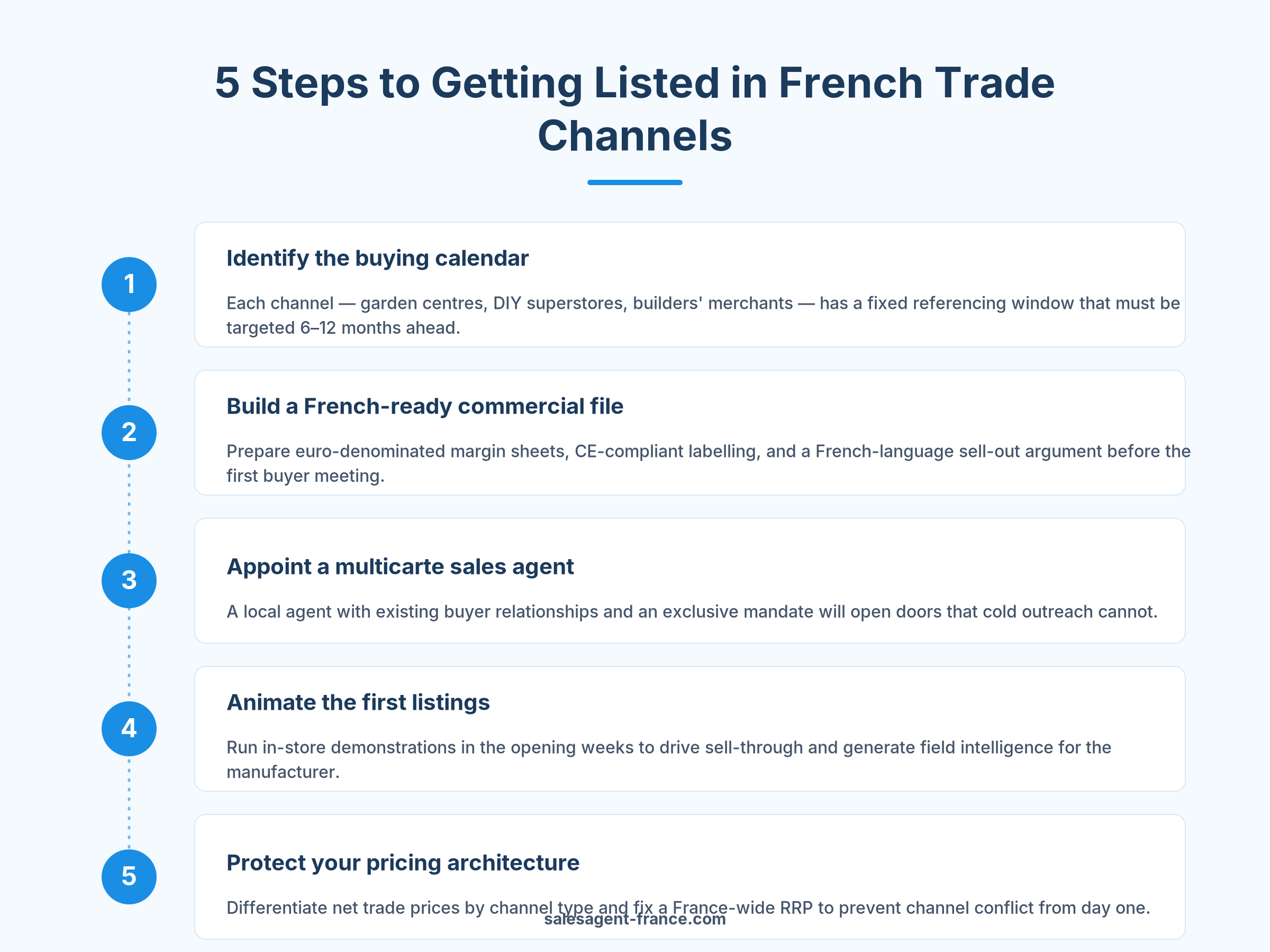
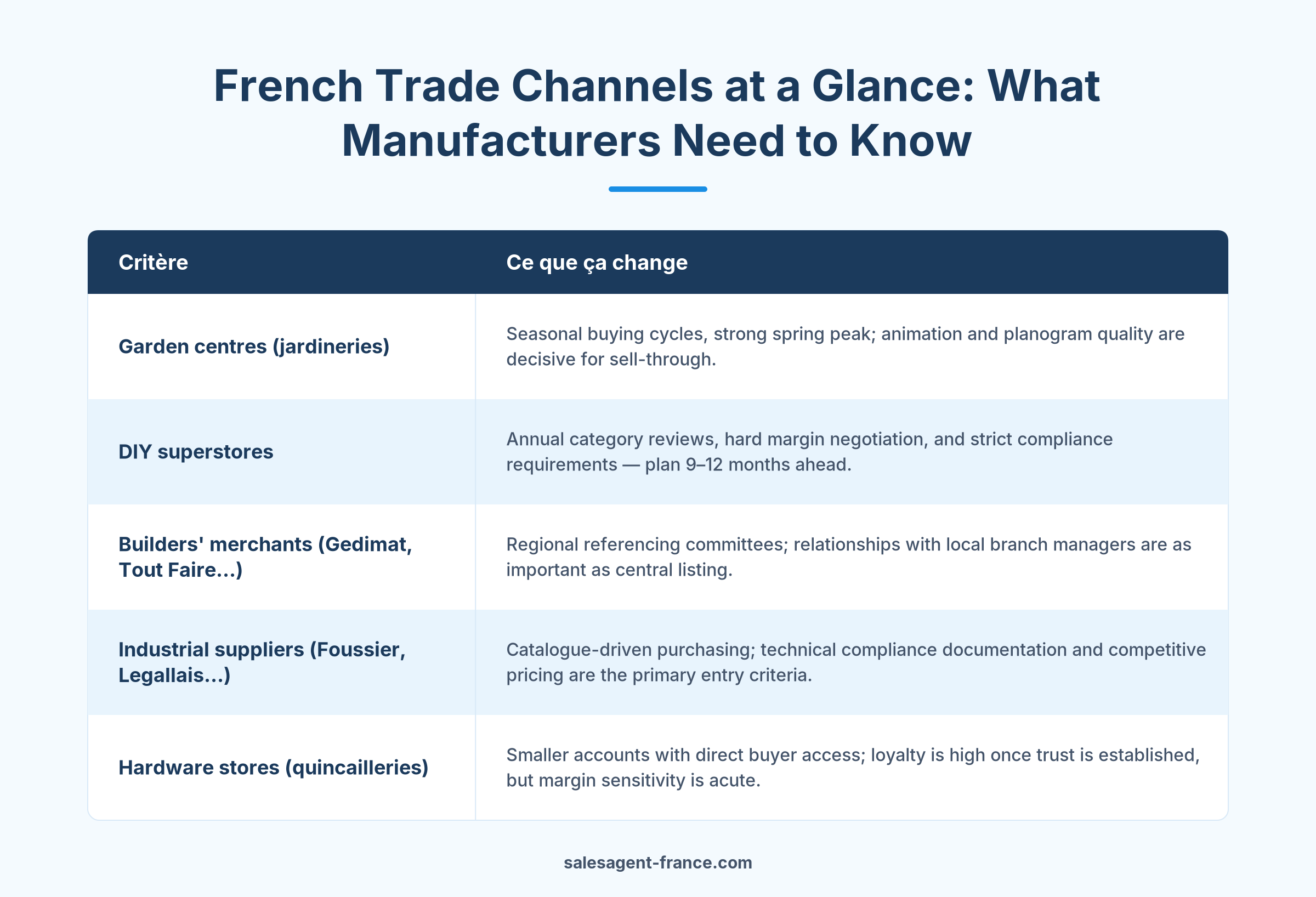
Every French trade channel operates on its own buying calendar. Garden centres (jardineries) typically lock in their seasonal ranges six to nine months in advance. DIY superstores — what British manufacturers often call home-improvement retailers — work on annual category reviews that are rarely reopened mid-year. Builders’ merchants such as Gedimat, Tout Faire, and Chausson Matériaux have referencing committees that meet on fixed schedules. Industrial suppliers including Setin, Foussier, Legallais, Trenois Decamps, and Prolians maintain central catalogues updated at defined intervals.
The practical implication: identify your target channel’s referencing window at least six to twelve months before you expect your first delivery. Arriving with samples the week before a range review closes is the surest way to wait another twelve months for a second chance.
Build a French-ready commercial file — not a translation of your home-market brochure
French trade buyers are accustomed to seeing well-structured commercial files. They will want margin calculations in euros, a clear RRP, suggested planogram layouts, and your minimum order quantities stated upfront. What they will not want is a PDF that was designed for a German Baumarkt or a British home-improvement retailer and then passed through a translation tool.
Adapt your packaging to French norms: bilingual labelling (French/language of origin), CE marking where applicable, and French-language safety data sheets for any product in the EPI category. Our experience with brands such as Difac (PPE) and SPIT (fixings) confirms that buyers in both industrial supply and DIY contexts will reject a range at the first meeting if the compliance paperwork is not in order.
Include a clear sell-out argument: not what your product does, but what it will do for the buyer’s category margin and customer basket.
Use a multicarte sales agent to open doors that would otherwise stay shut
A multicarte sales agent working in a given territory already has the buyer relationships, the credibility, and the diary access that a new entrant simply cannot replicate quickly. When one of our agents walks into a Legallais branch or a regional Prolians outlet, the conversation starts at a different level than a cold call from an unknown manufacturer.
The key condition: your range must be genuinely complementary to the agent’s existing portfolio. A fixings range sits naturally alongside Master Lock security products or Mottez garage equipment; a competing fixings brand would not be taken on. This complementarity is what makes the multicarte model work for everyone — the agent, the buyer, and the manufacturer.
Under an exclusive distribution mandate covering a defined territory, the agent has a direct commercial interest in growing your sell-through. That alignment of incentives is difficult to replicate with a salaried rep who may be pulled in different directions.
Treat the first listing as a test, not a victory
Securing an initial reference is the beginning of the work, not the end of it. French buyers — particularly in garden centres and hardware stores — will watch your sell-through figures closely during the first selling season. A range that sits on shelf without moving will be delisted with minimal ceremony at the next range review.
What actually drives sell-through in the first months:
- A clean, well-signed planogram that respects the allocated shelf space
- At least one in-store demonstration or animation in the opening weeks, especially for product categories that need explanation (EPI, power tool accessories, garden care)
- Promotional pricing timed to the channel’s peak traffic period — spring for garden centres, autumn for builders’ merchants stocking up for winter projects
- Responsive replenishment: a buyer who runs out of stock and cannot get a quick answer will fill the gap with a competitor and rarely return
The first six months on shelf define whether your range becomes a fixture or a footnote.
Animate your points of sale — and measure the results
In-store animation is not a luxury reserved for FMCG brands. In the channels Go Distribution covers, a well-run product demonstration can multiply sell-through by a factor of three to five for the duration of the event. We have seen this consistently with cutting tools (Alpha Coupe), locking systems (Master Lock), and toilet hygiene products (Boku) — categories where the customer needs to see, touch, and understand the product before committing.
What makes an animation effective in a French trade context:
- A demonstrator who speaks the product’s technical language, not a generic promoter reading from a script
- Coordination with the department manager (chef de rayon) well in advance — turning up unannounced is a relationship risk, not a shortcut
- A simple tracking sheet that records units sold during the event versus the equivalent period the previous week
- Feedback fed back to the manufacturer within 48 hours, covering objections, pricing reactions, and competitor activity observed on shelf
That last point matters more than most manufacturers realise. Field intelligence gathered during animations is some of the most accurate market data available — far more reliable than a desk-based competitive review.
Manage your pricing architecture across channels
One of the most common mistakes made by manufacturers entering France for the first time is offering the same net price to every type of distributor. A quincaillerie (hardware store) operating on tighter margins than a DIY superstore will not be able to compete at the shelf if they buy at the same price as a large-format retailer. Conversely, a consistent retail price architecture protects your brand positioning and prevents the channel conflict that destroys distributor loyalty.
Practical steps:
- Define a recommended retail price (RRP) for France and stick to it across all channels
- Differentiate your net trade price by channel type, not by individual account, to stay legally defensible under French commercial law
- Build a promotional envelope into your margin structure from day one — buyers will ask for it, and scrambling to find it after referencing damages trust
Questions fréquentes
How long does it typically take to get a first listing in a French DIY superstore or builders’ merchant?
From first contact to confirmed referencing, expect a minimum of six to nine months for a DIY superstore and four to six months for a regional builders’ merchant such as Chausson Matériaux or Gedimat. Having a field agent with an existing buyer relationship can compress that timeline significantly, but it cannot eliminate the channel’s internal decision process.
Is an exclusive distribution mandate necessary, or can a manufacturer appoint multiple agents for the same territory?
Non-exclusive arrangements exist but rarely deliver the same commercial commitment. An agent operating without exclusivity has less incentive to invest time and credibility in building your brand. Exclusive mandates covering a defined geography are the standard in French trade distribution for precisely this reason — they protect both parties.
What categories sell best through industrial supply networks such as Foussier, Setin, or Trenois Decamps?
Personal protective equipment (PPE), fixings and anchoring systems, cutting tools, and locking solutions are the strongest performers in that channel. Products that meet specific French or European technical standards — and can prove it at the point of referencing — have a material advantage over those that cannot. See our detailed guide on distributing EPI through French industrial supply networks for more detail.
Vous cherchez à distribuer vos produits en France ?
Go Distribution places your ranges in garden centres, DIY superstores, builders’ merchants, industrial suppliers and hardware stores — 30 years of field experience across the South of France.
Ready to open the right doors in France?
Distributing products through French trade networks is a process that rewards preparation, timing, and consistent field presence. The channels are well-structured, the buyers are professional, and the opportunity for a manufacturer with the right range is real — but only if the approach matches how those networks actually work. If you are considering expanding your distribution into the South of France, get in touch with Go Distribution and let us assess whether your range is a fit for our portfolio.
